01
Bối cảnh & Định nghĩa
Tại sao cần Harness? Agent thực sự là gì?
Vấn đề cần giải quyết
- Coding agents được giao việc ngày càng tự chủ: viết code, sửa bug, refactor, mở PR, review chéo.
- Model không hiểu hết ràng buộc kiến trúc, convention nội bộ, ưu tiên kinh doanh.
- Chỉ dùng model mạnh hơn không đủ — code "nhìn đúng" nhưng vi phạm tinh thần hệ thống.
Agent = Model + Harness Fowler · Trivedy · Osmani
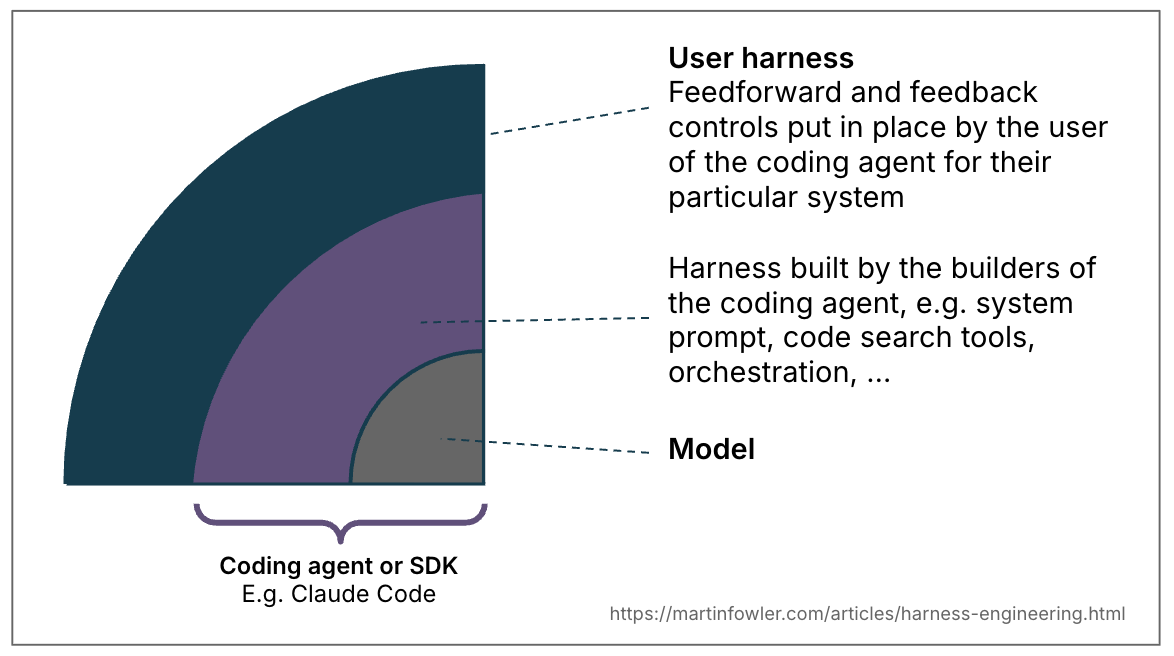
Ba lớp: Model lõi (LLM) → Builder harness (Anthropic/OpenAI) → User harness (đội bạn)
- Model — bộ não LLM (Claude, GPT…).
- Builder harness — tool, sandbox, planner, memory do nhà cung cấp dựng sẵn.
- User harness — tài liệu, rule, hook, linter, sensor riêng cho codebase của đội bạn.
"Skill Issue" & The Ratchet HumanLayer · Hashimoto
Reframe: mọi thất bại của agent là vấn đề cấu hình, không phải giới hạn model.
| Agent làm sai | Giải pháp harness |
|---|---|
| Không biết convention | Bổ sung vào AGENTS.md |
| Chạy lệnh nguy hiểm | Thêm blocking hook |
| Lạc hướng task dài | Tách planner / executor |
| Ship code lỗi | Nối typecheck back-pressure |
The Ratchet — Vòng siết một chiều
- 1Agent mắc lỗi cụ thể.
- 2Phân tích: harness gap hay model limit?
- 3Cập nhật harness: rule, hook, linter, sensor mới.
- 4Mỗi constraint trace được về một incident thực.
- 5Chỉ siết chặt — không nới lỏng tuỳ tiện.
02
Khung tư duy: Hai trục kiểm soát
Guides ↔ Sensors · Computational ↔ Inferential
Guides (Feedforward) & Sensors (Feedback) Fowler
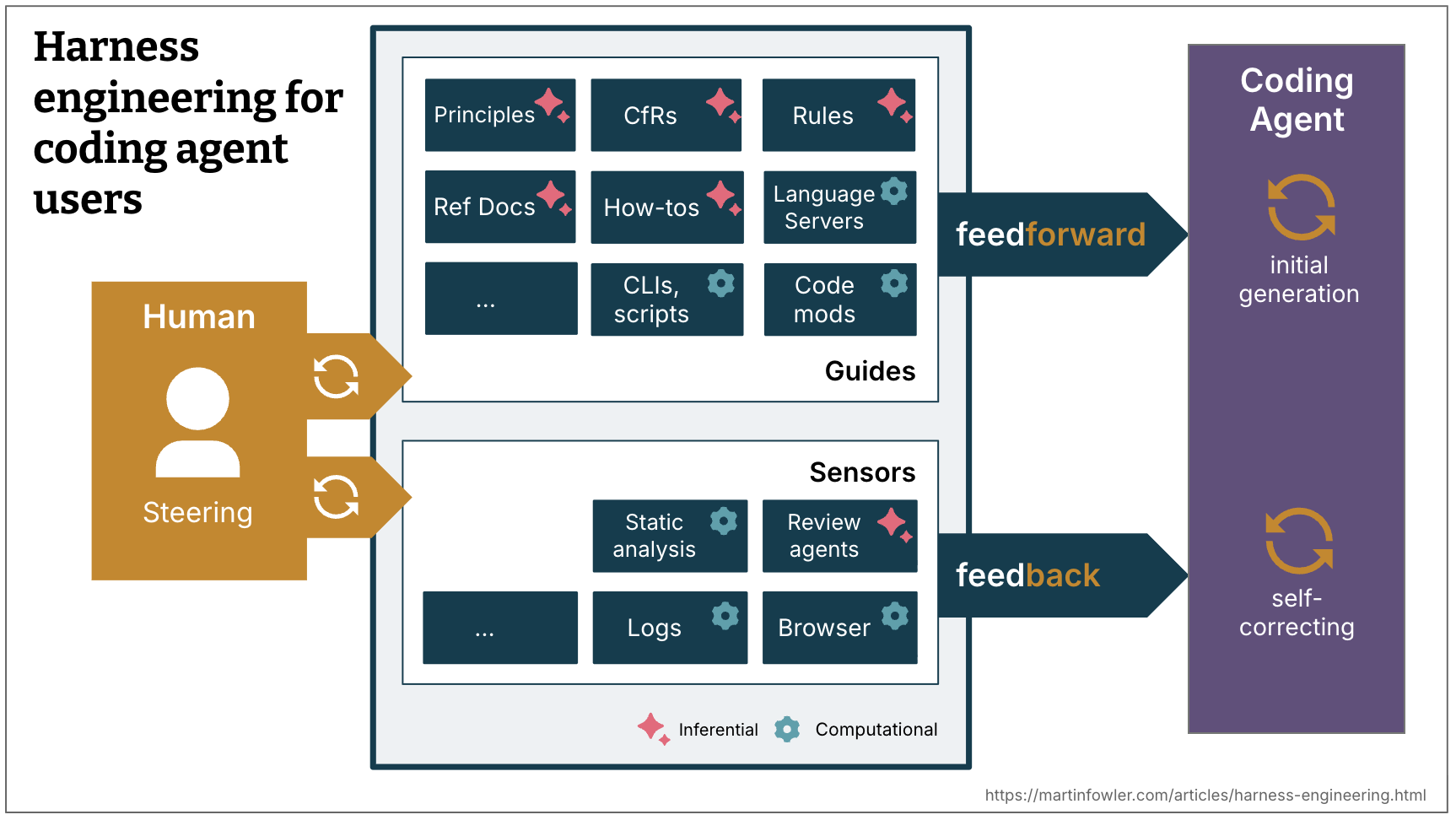
Con người (Steering Loop) liên tục cải thiện cả Guides lẫn Sensors theo thời gian
Định hướng agent trước khi hành động.
ADR, coding standards,
AGENTS.md, how-to skills, ref docs, Language Server (LSP), MCP tools.
Cho agent tự sửa sau khi hành động.
Lint, type check, test, architecture fitness, AI review — tín hiệu tối ưu cho LLM đọc.
Computational ↔ Inferential Fowler
| Tiêu chí | Computational | Inferential |
|---|---|---|
| Bản chất | Deterministic, chạy trên CPU | Suy luận ngữ nghĩa qua LLM / GPU |
| Ví dụ | Unit test, lint, type check, ArchUnit, dep-cruiser | AI code review, LLM-as-judge, semantic diff |
| Tốc độ & chi phí | ms → s, gần như miễn phí | s → phút, tốn token |
| Độ tin cậy | Cao, ổn định, lặp lại được | Xác suất, có thể sai |
| Phạm vi đo | Cú pháp, cấu trúc, coverage | Ý đồ, ngữ cảnh, ngữ nghĩa |
03
Thành phần Harness
AGENTS.md · Tools & MCP · Sub-agents · Hooks & Lint
AGENTS.md là mục lục, docs/ là System of Record HumanLayer · OpenAI
Nguyên tắc viết AGENTS.md
- Convention & naming rule.
- Tool được / không được dùng.
- Hành động cần phê duyệt (push, drop table…).
- Cách viết test, tổ chức file theo layer.
Cấu trúc docs/ — System of Record
AGENTS.md          ← ~100 dòng, bản đồ
ARCHITECTURE.md    ← sơ đồ domain + layer
docs/
├── design-docs/   ← quyết định thiết kế
│   ├── index.md
│   └── core-beliefs.md
├── exec-plans/    ← kế hoạch đang chạy
│   ├── active/
│   └── tech-debt-tracker.md
├── product-specs/ ← spec tính năng
├── references/    ← llms.txt thư viện
├── DESIGN.md
├── QUALITY_SCORE.md
└── SECURITY.mdTools & MCP — Ít nhưng chất HumanLayer

Tool overload: mỗi MCP tool description chiếm context — agent vào "dumb zone" sớm hơn
Tool description = prompt thật — MCP độc hại có thể prompt-inject trước khi agent bắt đầu.
npm install random-package — review trước khi cài.
Sub-agents — Context Firewall HumanLayer

Sub-agent = context firewall — noise của subtask không tích lũy vào parent session
- Session độc lập cho từng subtask rời rạc.
- Ngăn intermediate noise làm ô nhiễm parent context.
- Chroma research: model kém chính xác hơn ở context dài — sub-agent tốt hơn cửa sổ to.
Hooks & Custom Lint — Back-pressure cho LLM HumanLayer · OpenAI
Hook chạy tự động tại lifecycle event — tương tự git hook nhưng linh hoạt.
| Event | Hook |
|---|---|
| Sau mỗi edit file | Typecheck, lint, format |
| Trước commit | Test, coverage, dep-cruiser |
| Trước push / PR | Human approval required |
| Lệnh nguy hiểm | Block rm -rf, DROP TABLE |
Lint message viết cho LLM
# Hook chạy sau mỗi edit
biome format --write . 2>/dev/null
tsc --noEmit 2>&1 \
  | grep -E "error" && exit 1 || exit 0
04
Ba chiều kiểm soát chất lượng
Maintainability · Architecture Fitness · Behaviour
Ba chiều kiểm soát Fowler
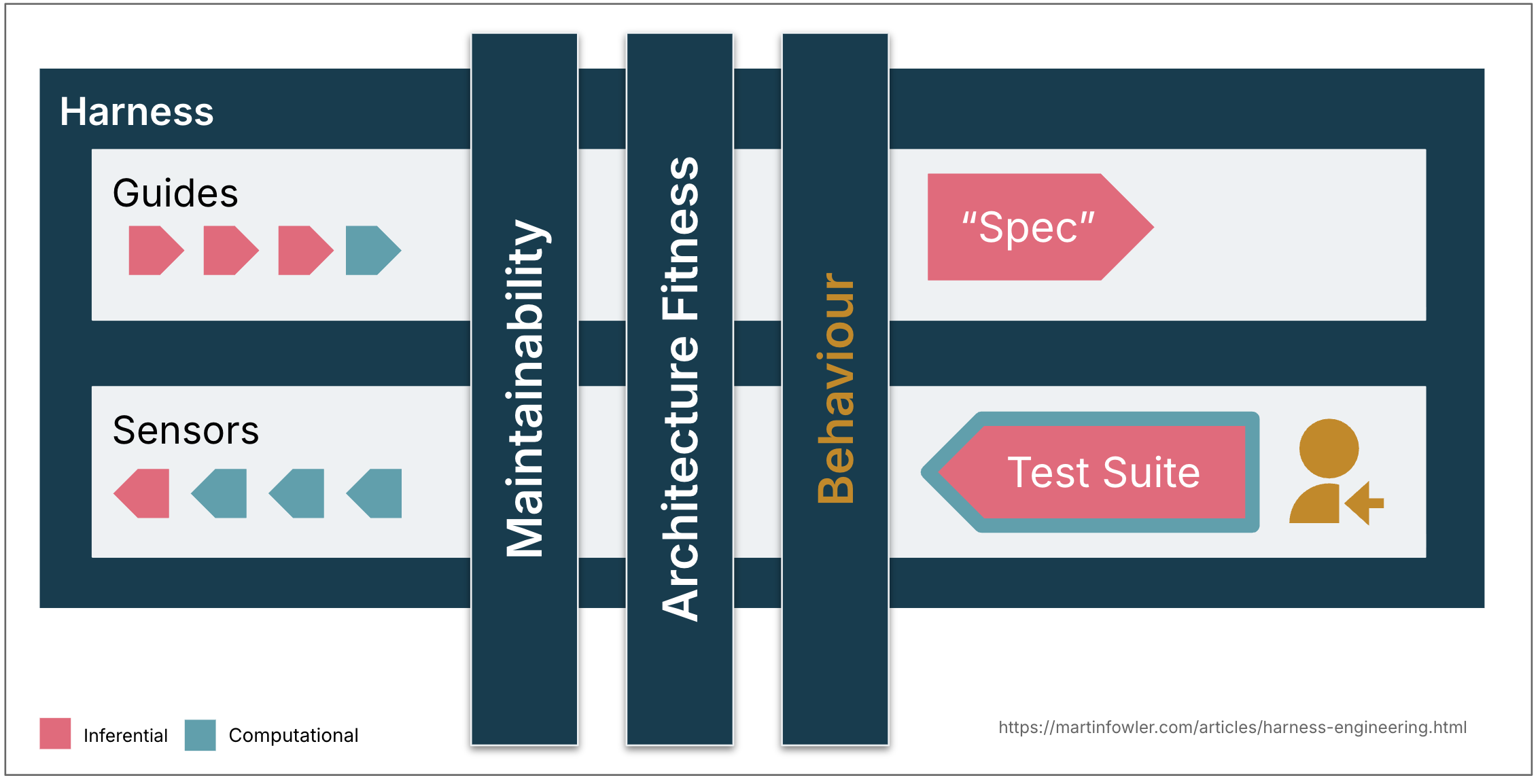
Trục ngang: Guides ↔ Sensors · Trục dọc: 3 chiều kiểm soát
Rõ ràng, ít trùng lặp, dễ sửa. Linter, type checker, SonarQube, jscpd, AI review naming/dead code. Computational mạnh nhất.
Layer, dependency, NFR. ADR, C4, ArchUnit / Konsist / dep-cruiser, contract test, OpenAPI lint. Sân nhà của SA.
Code làm đúng nghiệp vụ. BDD, acceptance criteria, property-based, mutation test. Nhóm yếu nhất — vẫn cần test thủ công.
Kiến trúc phân lớp cứng — Prerequisite, không phải afterthought OpenAI
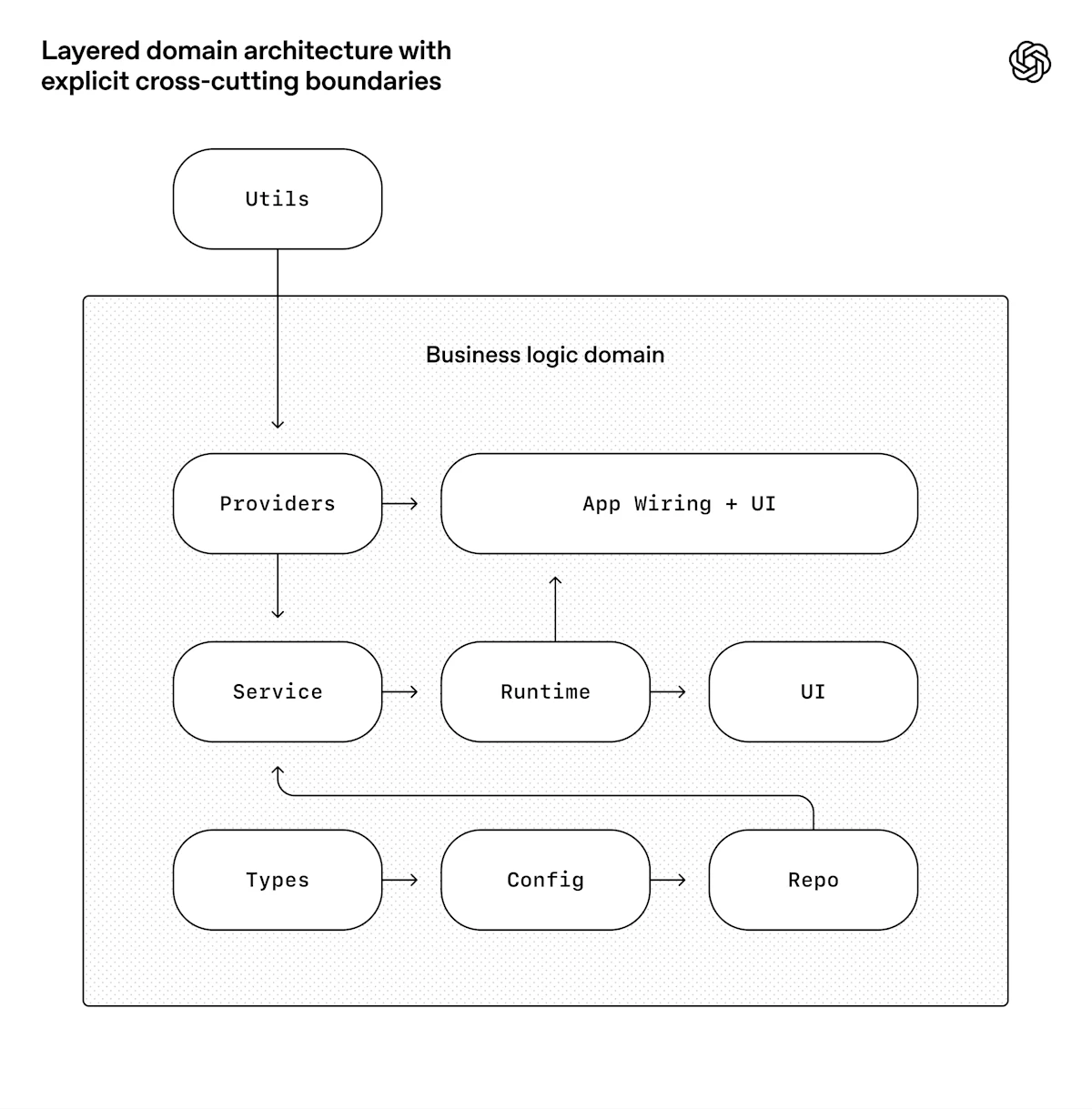
Mỗi domain: Types → Config → Repo → Providers → Service → Runtime → UI. Cross-cutting chỉ qua Providers
05
Quản lý Context dài
Context Rot · Compaction · Long-horizon execution
Context Rot & Compaction HumanLayer
Ba kỹ thuật chống Context Rot

Compaction: sub-agent trả bản tóm tắt kèm source citation — parent context nhận thông tin đã chắt lọc
Long-horizon Execution Osmani · HumanLayer
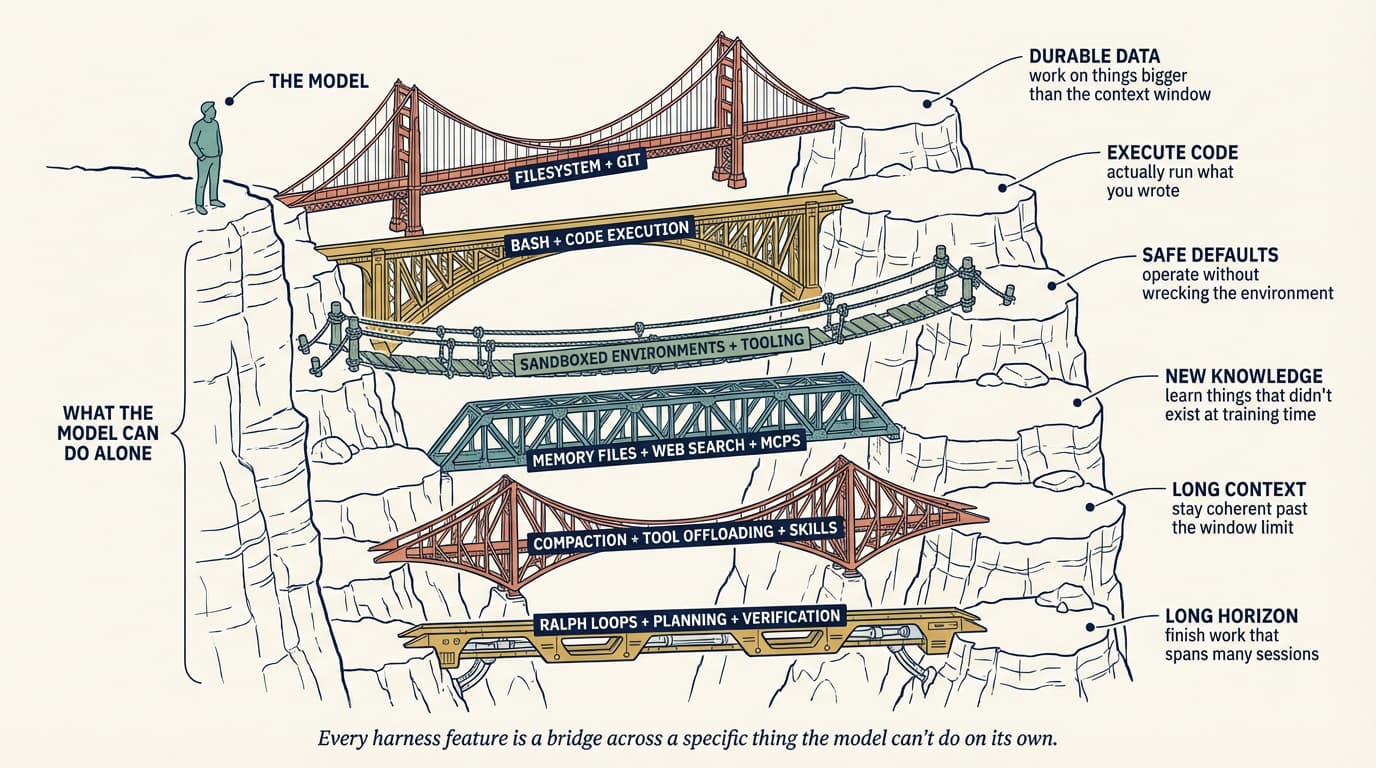
Mỗi gap hành vi của model → thiết kế component harness tương ứng
06
Vòng đời & Vận hành ở quy mô
Keep Quality Left · Observability · Merge gate · Entropy · Templates
Keep Quality Left — Vòng đời thay đổi Fowler
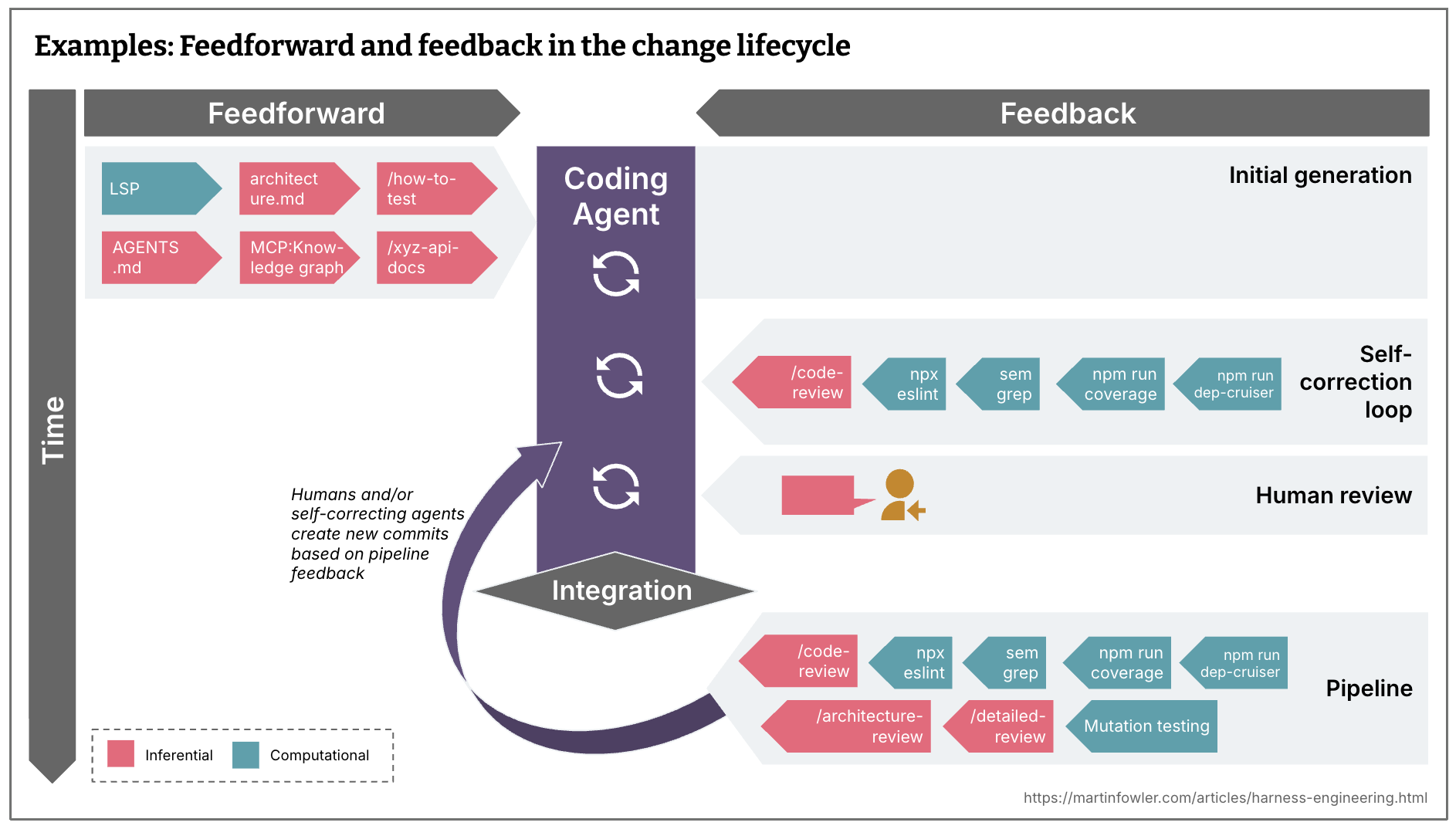
Feedforward → Tự sửa lần 1 → Human review → Integration → Post-integration pipeline
- Trước commit: LSP, AGENTS.md, /how-to-test skill → agent generate.
- Tự sửa lần 1: eslint, semgrep, dep-cruiser, /code-review (nhanh, rẻ).
- Human review = một feedback sensor nữa trong pipeline.
- Post-integration: /architecture-review, mutation test (đắt → chạy sau merge).
Làm app "đọc được" với agent OpenAI
LogQL / PromQL / TraceQL. Teardown sau khi task xong.
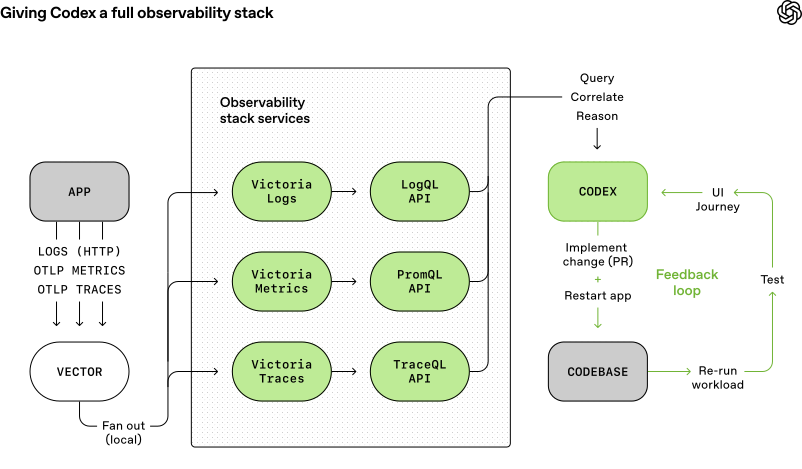
App → Vector → stack quan sát → agent query & suy luận → fix → restart → lặp lại
Merge gate tối giản + Post-merge sensors OpenAI · Fowler
Triết lý merge
Ví dụ post-merge sensors
- Architecture fitness: linter kiểm tra layer dependency trên main sau mỗi merge.
- Full regression: integration + e2e quá chậm cho PR → chạy mỗi đêm trên main.
- Entropy detector: background agent tìm drift khỏi golden principles.
- Drift detection: /find-dead-code, /code-coverage-quality, Dependabot.
- Runtime signals: latency SLO, error rate, /log-anomalies → gợi ý tự động.
Entropy & Golden Principles OpenAI
Vấn đề
Coding agent copy pattern đã có trong repo — kể cả pattern xấu. Theo thời gian → architectural drift.
Giải pháp
Ví dụ Golden Principles
Harness Templates theo Topology Fowler
Vì sao cần Harnessability?
- Không phải codebase nào cũng áp dụng harness hiệu quả.
- Code legible, navigable, tractable thì harness mới phát huy.
- Giải pháp: harness template theo topology (loại service).
Node.js
JVM
Golang
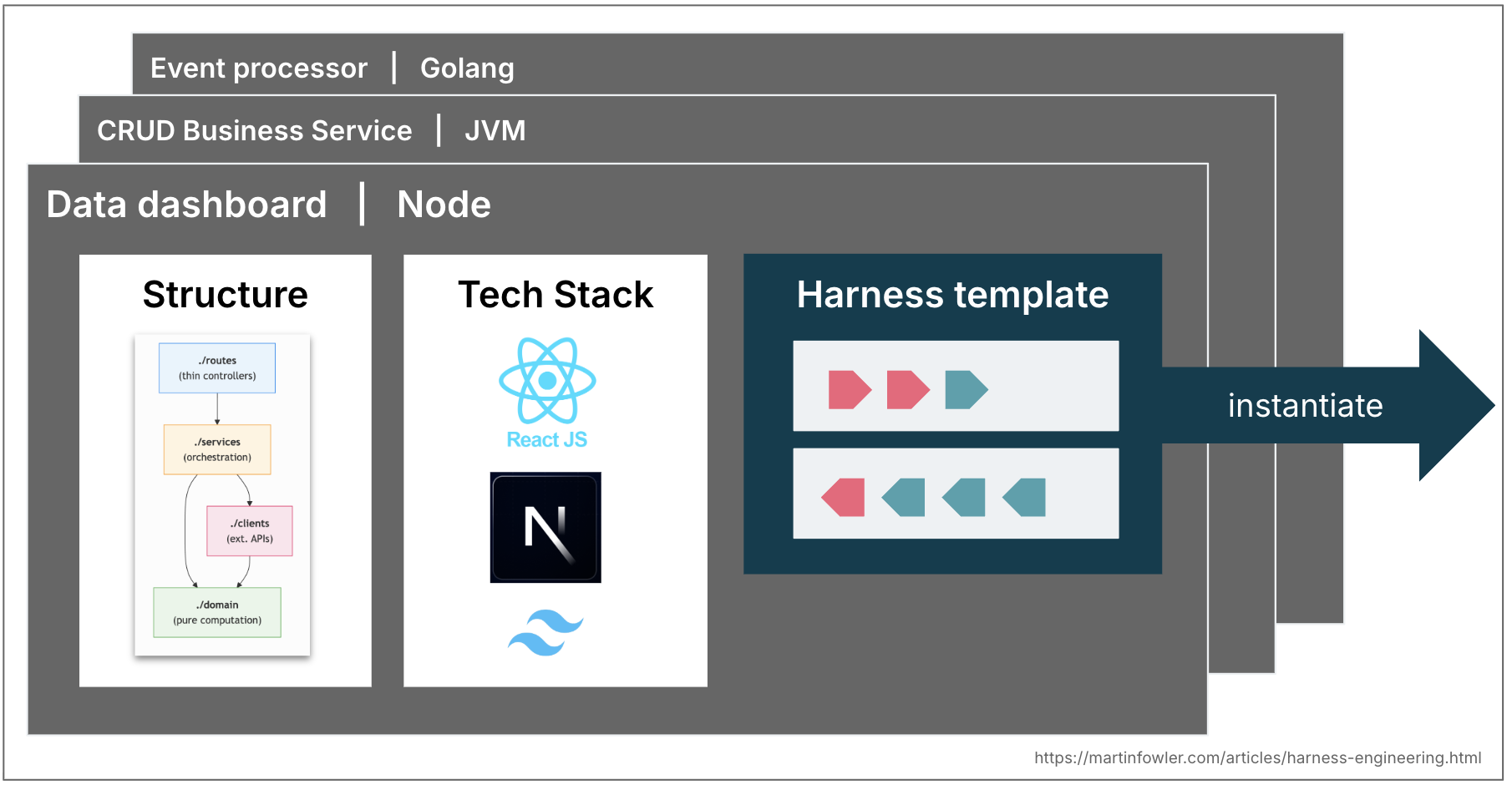
Mỗi topology → 1 bộ guides + sensors sẵn có
07
Tư duy nâng cao
Boring Tech · Co-evolution · Harness-as-a-Service
Boring Tech — Ưu tiên công nghệ "nhàm chán" OpenAI
Bài toán: chạy 100 API call, tối đa 5 cái cùng lúc.
import pLimit from 'p-limit';
const limit = pLimit(5);
await Promise.all(
  items.map(i => limit(() => callApi(i)))
);→ agent nhớ API cũ, sinh code fail CI
async function mapWithConcurrency(
    items, fn, limit) {
  const running = new Set();
  for (const item of items) {
    const p = fn(item).then(
      () => running.delete(p));
    running.add(p);
    if (running.size >= limit)
      await Promise.race(running);
  }
  await Promise.all(running);
}Promise — API không đổi bao giờ→ dễ thêm OTel span, test coverage 100%
Model–Harness Co-evolution Osmani
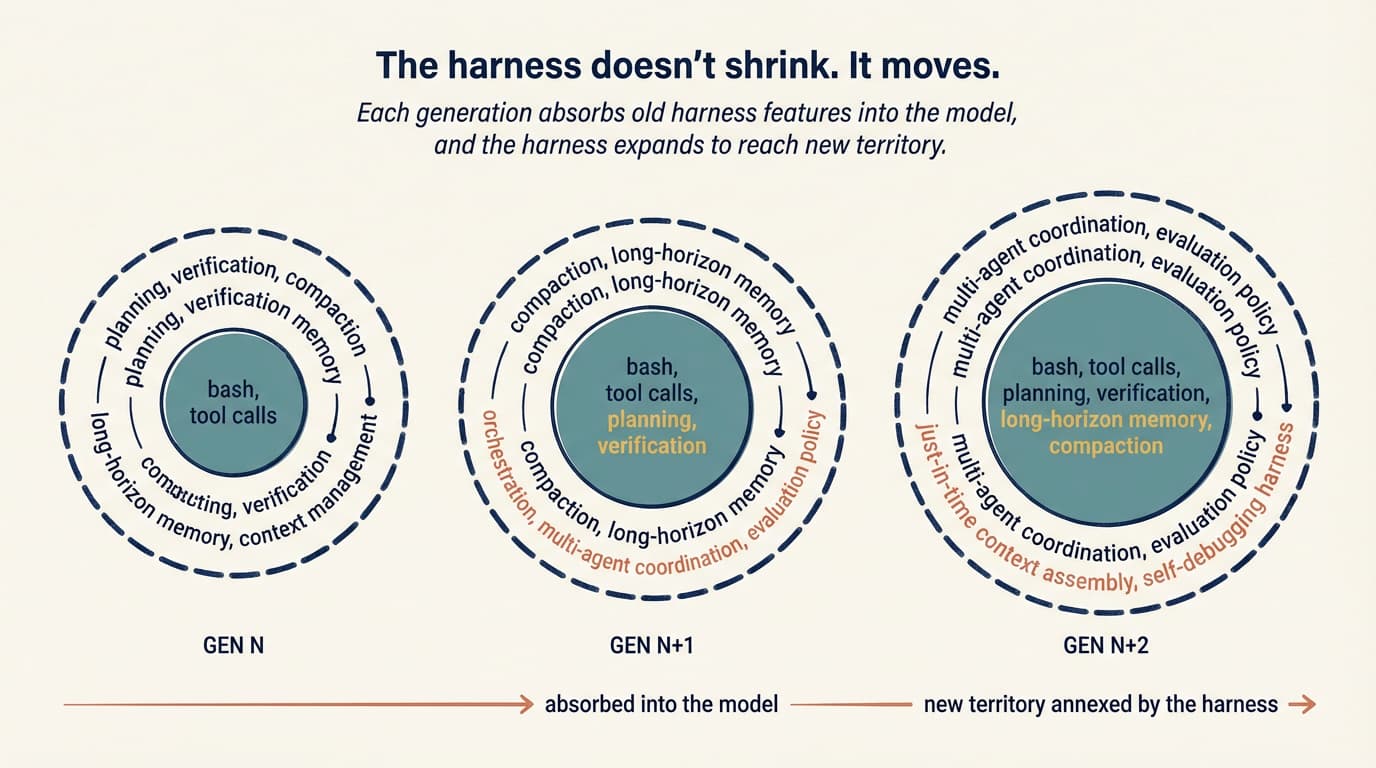
Harness và model co-evolve: primitive trong harness hôm nay → capability của model ngày mai
Model tốt hơn làm mất hiệu lực scaffolding cũ (dead code), đồng thời tạo thách thức mới.
Harness-as-a-Service (HaaS) Osmani
- Chọn framework phù hợp use case & stack.
- Cấu hình 4 trụ cột: context · control · action · observation.
- Tối ưu prompt & tool theo domain — không build lại runtime từ đầu.
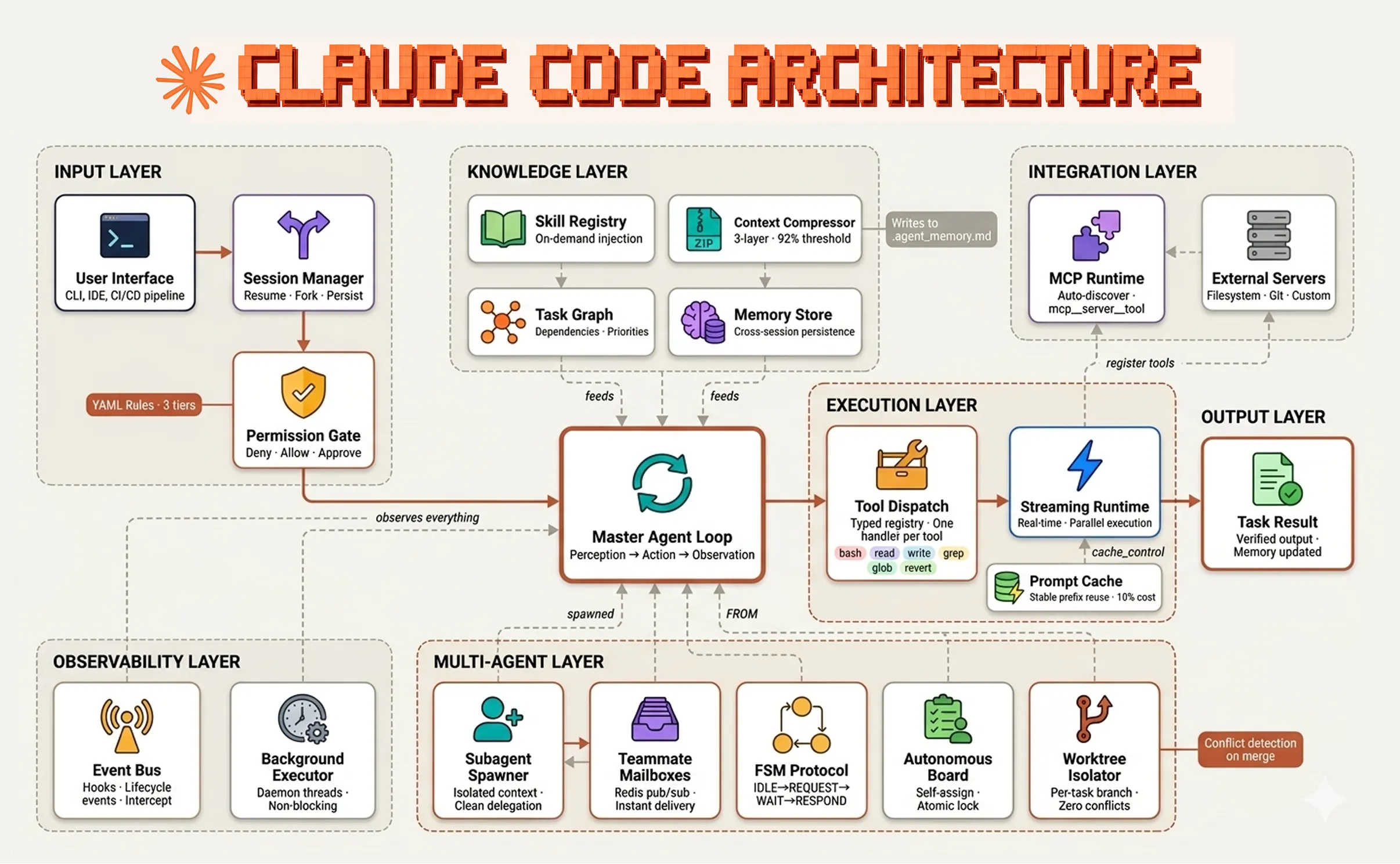
Claude Code — harness production 7 layer (tham chiếu kiến trúc HaaS)
Take-aways thống nhất cho team
- Coi Harness là sản phẩm — có owner, roadmap, metric riêng. Reframe failures: agent sai → tìm harness gap, không phải đổi model.
- AGENTS.md ~100 dòng, là mục lục;
docs/là System of Record — mọi tri thức encode thành markdown có phiên bản. - Hooks & custom lint = back-pressure cho LLM: thành công im lặng, lỗi mới verbose, error message viết cho LLM đọc.
- Sub-agent cho subtask dài — bảo vệ parent context khỏi noise (context firewall).
- Kiến trúc cứng là prerequisite — không trì hoãn; enforce bằng custom linter & structural test từ ngày đầu.
- Ưu tiên Computational, dùng Inferential khi cần; bắt đầu từ Maintainability + Architecture Fitness (ROI cao nhất).
- Merge gate tối giản + Post-merge sensors + Golden Principles + background garbage collection → ngăn entropy ở quy mô agent.
- Harness là living system: siết theo Ratchet, xoá scaffolding khi model giỏi lên — dead-code harness cũng là tech debt.